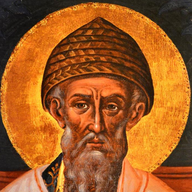
چهار جشن بزرگ در کورفو: چگونه سنت اسپیریدون جزیره را از قحطی، طاعون و محاصره نجات داد
On the island of Corfu (Kerkyra), liturgical tradition is inseparably woven into civic history. Four times a year, the silver reliquary containing the incorrupt body of Saint Spyridon is positioned upright inside a gilded canopy and carried through the streets of the Old Town accompanied by all of the island's philharmonic orchestras. Each of these Four Great Litanies (processions) commemorates a historically documented deliverance of the island.
1. The Holy Saturday Litany: Deliverance from Famine (1553)
The oldest litany takes place every year on Holy Saturday at 9:00 AM. In the spring of 1553, a severe crop failure and maritime disruption plunged Corfu into a devastating famine. Grain reserves vanished entirely on the eve of Pascha.
On Good Friday and Holy Saturday, the townspeople wept before the reliquary of Saint Spyridon. That very night, captains of several merchant vessels carrying wheat past the Ionian Sea toward Italy beheld a white-bearded bishop in a woven shepherd's cap in their sleep. He instructed them to steer immediately into the port of Kerkyra, promising fair payment. At daybreak on Holy Saturday, the harbor was filled with grain ships, saving the population from starvation.
2. The Palm Sunday Litany: Deliverance from the First Plague (1629)
In late 1629, an arriving ship brought the deadly bubonic plague to Corfu. Dozens died daily, and seventeenth-century medicine was helpless. The islanders turned with fervent repentance to their patron saint.
Soon, night sentries along the fortress walls witnessed a mysterious, radiant light hovering above the dome of Saint Spyridon's church, dispelling the gloom over the city. By Palm Sunday of 1630, the epidemic ceased abruptly and completely. Ever since, the longest procession of the year winds along the path of the old Venetian fortifications on Palm Sunday.
3. The First Sunday of November Litany: Victory over the Second Plague (1673)
In the autumn of 1673, a second and even deadlier wave of plague struck Kerkyra. For three consecutive days, the faithful prayed day and night around the Saint's relics. At the end of October, a pillar of celestial light appeared above the cathedral belfry, witnessed by thousands, including the Venetian governing officials. From that morning onward, not a single new case occurred. The Venetian Senate issued an official decree establishing the annual litany on the first Sunday of November.
4. The August 11 Litany: Raising the Ottoman Siege (1716)
In the summer of 1716, an Ottoman force of over 30,000 soldiers besieged Corfu, defended by a small garrison under Field Marshal Johann Matthias von der Schulenburg. Inside the city, families prayed the Akathist continuously before Saint Spyridon's shrine.
On the night of August 10–11, just before the final assault, an unprecedented August thunderstorm burst over the camps. Simultaneously, the besieging troops saw Saint Spyridon in the sky holding a flaming torch and a sword at the head of a heavenly host. Seized with terror, the invaders abandoned their artillery and supplies and fled the island before dawn.
Spiritual Lesson of the Litanies: Every procession on Corfu reminds us that Saint Spyridon intercedes not only for individuals in personal hardship, but also for entire cities and nations facing war, pestilence, and famine.
Canonical akathist text, 40-day rule, custom daily reminders & offline mode on Google Play.